CEIRS Center Archive
The Centers of Excellence for Influenza Research and Surveillance (CEIRS) was a National Institute of Allergy and Infectious Diseases (NIAID) funded influenza research program. CEIRS operated domestic and international influenza surveillance networks to monitor and evaluate newly emerging viral strains from 2007 to 2021. The program consisted of five research centers and one data processing and coordinating center. These centers worked collaboratively to advance influenza research. During the tenure of the program, CEIRS researchers published over 2,500 articles and generated over 17,000 influenza-specific reagents.
The important research done by the CEIRS program is now overseen by the Centers of Excellence for Influenza Research and Response (CEIRR) Program. The legacy information documented here is for historic purposes only and reflects the status of the CEIRS Centers at the program’s end in 2021.
Center for Research on Influenza Pathogenesis (CRIP)
CRIP comprised of a domestic and international animal influenza virus surveillance network that focused on pathogenesis and host response. The network brought together experts and leaders in influenza virus research from various disciplines including virology, immunology, molecular biology, veterinary medicine, ornithology, and bioinformatics. The CRIP surveillance network spanned all continents, which allowed worldwide sampling and isolation of animal and human influenza viruses and early detection of emerging viruses capable of causing pandemic threats. Through its research program, scientists at CRIP were dedicated to understanding influenza virus animal reservoirs, evolution, transmission, and adaptation to humans. Other areas of study included pathogenesis, evasion of immunity, and induction of host and vaccine responses.
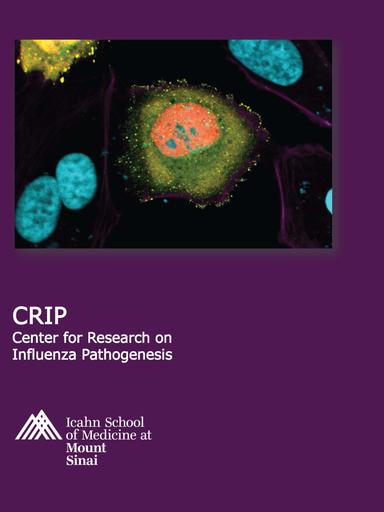
For more information read about the program in the CRIP Brochure.
- Dr. Adolfo García-Sastre, PhD, Principal Investigator
- Eric Bortz, PhD, Associate Professor, Department of Biological Sciences, University of Alaska Anchorage
- Harm van Bakel, PhD, Assistant Professor, Department of Genetics and Genomic Sciences, Icahn School of Medicine at Mount Sinai
- Ryan Camping, Program Coordinator, Center for Research on Influenza Pathogenesis (CRIP)
- Marlene Espinoza-Moraga, PhD, Scientific Program Coordinator, Department of Microbiology, Icahn School of Medicine at Mount Sinai
Emory-UGA Center of Excellence for Influenza Research and Surveillance
Emory-UGA CEIRS highlighted the surveillance of swine influenza viruses and the investigation of swine immune responses to viral infection. Additionally, collaborators in China conducted animal surveillance in swine and poultry. Research focused on various efforts, including gaining a better understanding of human immune response to influenza vaccination, especially in pregnant women, and evaluating the duration of the influenza antibody producing cells in the bone marrow. A better understanding of the interplay between the flu virus and the bone marrow could aid in the development of influenza vaccines that induce long lasting immunity to multiple strains of flu.
For more information read about the program in the Emory-UGA Brochure.
- Dr. Walter Orenstein, MD, Principal Investigator
- Dr. Richard Compans, PhD, Co-Principal Investigator
- Dr. Anice Lowen, PhD, Co-Principal Investigator
- Vicki Hertzberg, PhD, Associate Professor, Department of Biostatistics and Bioinformatics, Emory University
- Andrea Plotsky, Manager, Department of Biostatistics, Emory University
- Ramya Govindarajan, MSPH, Data Manager, School of Nursing, Emory University
- Erin-Joi Collins, Sr. Associate Director, Emory-UGA Center of Excellence for Influenza Research and Surveillance (CEIRS), Emory University
Johns Hopkins Center of Excellence for Influenza Research and Surveillance
Johns Hopkins CEIRS developed improved methods to rapidly identify circulating influenza strains during the flu season. To do so, human influenza virus strains in the United States and Taiwan were tracked as part of an effort to build a database of influenza cases in real time from hospitals and other health care facilities. Such surveillance and tracking in a centralized database could aid in the development of influenza vaccines that better match the circulating seasonal strains. In addition, researchers analyzed the impact of influenza virus infection on human respiratory epithelial cells to better understand how to control and treat influenza infections.

For more information read about the program in the Johns Hopkins CEIRS Brochure.
- Dr. Richard Rothman, MD, PhD, Principal Investigator
- Dr. Andrew Pekosz, PhD, Co-Principal Investigator
- Tom Mehoke, MS, Data Manager, Staff Scientist, Johns Hopkins University Applied Physics Laboratory
- Peter Thielen, ALM, Staff Scientist, Johns Hopkins University Applied Physics Laboratory
- Katherine Fenstermacher, PhD, Executive Director, Johns Hopkins Center of Excellence for Influenza Research and Surveillance, Department of Emergency Medicine
New York Influenza Center of Excellence (NYICE)
Scientists at NYICE studied how the human immune system responds to flu vaccines and to seasonal and pandemic viral infections. Studies analyzed blood samples from adults and children from the same household that displayed no symptoms or acute symptoms of flu, and led to a better understanding of how the human immune system responds to the virus. These studies laid the groundwork to inform and improve the design of flu vaccines to better protect against illness. NYICE investigators also studied how social media platforms could be leveraged to collect real-time data on flu outbreaks.
For more information read about the program in the NYICE Brochure.
- Dr. David Topham, PhD, Principal Investigator
- Jeanne Holden-Wiltse, MPH, Department of Biostatistics and Computational Biology, University of Rochester Medical Center
- Donna Neu, PMP, New York Influenza Center of Excellence (NYICE)
St. Jude Center of Excellence for Influenza Research and Surveillance
The St. Jude CEIRS supported an international flu surveillance network focused on wild birds and domestic animals. The network included sites in the U.S., Canada, Bangladesh, China, Colombia, and Egypt. St. Jude researchers were interested in understanding how some avian flu viruses jump from infecting birds to humans and other mammals, while others do not. In addition to surveillance, researchers studied the human immune response to flu, risk factors associated with flu complications, transmission of flu, and other related factors. The CEIRS contract also supported St. Jude’s role in developing flu vaccine seed stock that could be used to ramp up production of new flu vaccines.

For more information read about the program in the St. Jude CEIRS Brochure.
- Dr. Richard Webby, PhD, Principal Investigator
- Dr. Stacey Schultz-Cherry, PhD, Co-Principal Investigator
- Nabanita Mukherjee, CEIRS Research Database Specialist
- Kristen Hildebrand, CCRP, Clinical Coordinator
- Pam McKenzie, PhD, Director, St. Jude CEIRS Global Surveillance
CEIRS Data Processing and Coordinating Center (DPCC)
A key mission of CEIRS was to foster innovative and collaborative basic and applied research on influenza viruses. The goal was to better understand how the virus evolves and adapts to animal and human hosts. The CEIRS DPCC was created to support this mission by providing a platform for data sharing and tracking and for community collaboration. This platform streamlined sharing of generated data with public repositories and increased the accessibility and usefulness of CEIRS data. The DPCC also served as an integrated resource for training, support, education, and collaboration throughout the program and with the broader scientific community.
- Gillian Air, PhD, Principal Investigator